Inbound lead generation is when people come to you (they found your content, a referral, or a search). Outbound lead generation is when you go to them (you email, call, or run ads at a list you chose).
I get asked which one to pick as if one of them wins. They don't. I built Openlead for the outbound half of the work: you describe the companies you want, and you get a list you can contact. Inbound still matters, and most teams I talk to end up running both. Here's how I tell them apart, and when I'd lean on each one.
In short
Write inbound programs when you can wait, and when a useful article, a community post, or a partner can bring the right companies to you. Run outbound when you already know the type of company you want and you need conversations this quarter. Most B2B teams should do both: inbound for compounding demand, outbound for control over who you talk to.
Key difference: inbound waits for a person to raise their hand; outbound starts from a list you built.
Inbound vs outbound lead generation at a glance
| Inbound lead generation | Outbound lead generation | |
|---|---|---|
| Definition | People find you through content, search, referrals, or product-led signup, then they become leads | You pick the companies and people, then you contact them first |
| When to use | You have time to publish and a topic buyers already search for | You have a clear ideal customer and you need meetings on a calendar |
| Common example | A how-to article that ranks, a webinar, a partner referral | A cold email sequence, a call block, a targeted LinkedIn message |
| Key difference | The buyer starts the conversation | You start the conversation |
What is inbound lead generation?
Inbound lead generation is the work of being findable and useful, so the right companies come to you. A payroll-software company might publish a guide to multi-country payslips, run a monthly webinar for HR teams, and collect signups from a free calculator. The lead is someone who opted in: they downloaded the guide, booked a demo, or started a trial.
The upside is trust. The person already has a problem you wrote about, so the first call is less cold. The downside is pace. A page can take months to rank, and you don't get to choose the exact 200 companies that show up. If you sell a narrow product (say, to Series A fintechs in Germany), inbound can leave you talking to plenty of almost-fits.
Inbound still needs a definition of the company you want. HubSpot's firmographics guide is a useful primer on those company fields. I wrote about that split in buyer persona vs ideal customer profile. The ICP decides which signups are worth a meeting. The persona decides what the landing page should say.
What is outbound lead generation?
Outbound lead generation is the work of building a list and contacting the people on it. That payroll-software team would write a one-sentence ICP ("HR-led companies in the EU with 80 to 400 staff and payroll in two countries"), find the companies that fit, pick the HR lead at each, and email or call them.
The upside is control. You choose the companies, the title, and the week you start. The downside is the work and the risk of being ignored. A generic sequence to a bought list wastes the domain you send from. Outbound only works when the list is tight and the message is specific.
I use outbound when I already know who should buy. The list is the hard part, which is why I also wrote a lead finder roundup and a guide to buy B2B leads (and when I wouldn't).
Inbound vs outbound lead generation: key differences
1. Who starts the conversation
Inbound starts when someone visits, subscribes, or asks for a demo. Outbound starts when you send the first email or make the first call. That changes the first sentence you write: inbound can assume interest, outbound has to earn the next click.
2. How fast you can book meetings
Outbound can fill a calendar in weeks if the list is good. Inbound usually compounds over quarters. If you have a quota this month and no inbound engine yet, outbound is the lever you can pull. If you only ever outbound, you start from zero every quarter.
3. How you measure it
Inbound you measure with traffic, conversion on the page or form, and the share of signups that match the ICP. Outbound you measure with list quality, reply rate, meeting rate, and cost per meeting. Mixing the two in one number hides a weak list or a weak page.
4. What it costs
Inbound costs time (writing, SEO, webinars) and sometimes ad spend on content. Outbound costs data, tools, and the time to write and follow up. Bought lists look cheap until you count bounces and complaints. I walk through prices and rules in that buy B2B leads guide, and through free options in B2B leads database free.
5. How they work together
The useful pattern is not a fight. Inbound content gives outbound a reason to write ("I published a benchmark your peers used"). Outbound meetings tell you which inbound topics actually get a reply. Use the same ICP in both, or you'll attract one kind of company and email another.
When to use inbound vs outbound lead generation
Use inbound lead generation when:
-
Buyers already search for the problem you solve.
-
You can publish for a few months before you need the volume.
-
A referral, community, or partner can send you the right companies.
Use outbound lead generation when:
-
You can describe the company you want in one sentence.
-
You need meetings on a set calendar, not "whenever the page ranks".
-
The market is small enough that waiting for inbound would miss it.
A two-person consultancy might live on referrals and one outbound block a week. A new sales team at a funded startup might outbound every day and let inbound catch up. Both can be right.
A worked example
You sell scheduling software to dental clinics with 3 to 10 chairs. Inbound is a short guide on missed appointments that those clinics can find later. Outbound is a list of those clinics, the practice managers, and a first email this week.
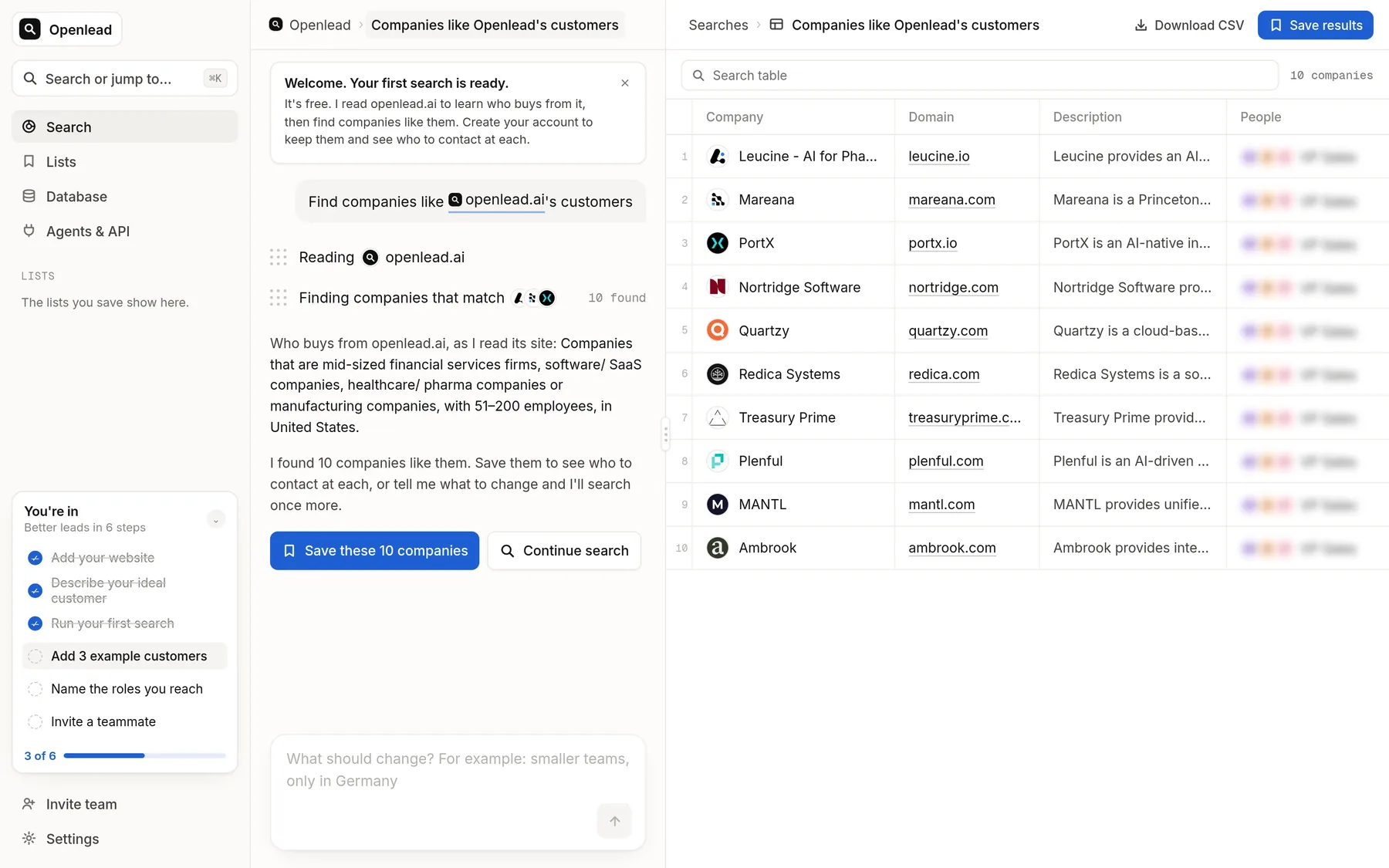
I would do both, but I would start with outbound if I need meetings this month. Openlead is for that outbound list: you describe the clinics in a sentence and you get companies that fit.
Build your outbound list from a sentence
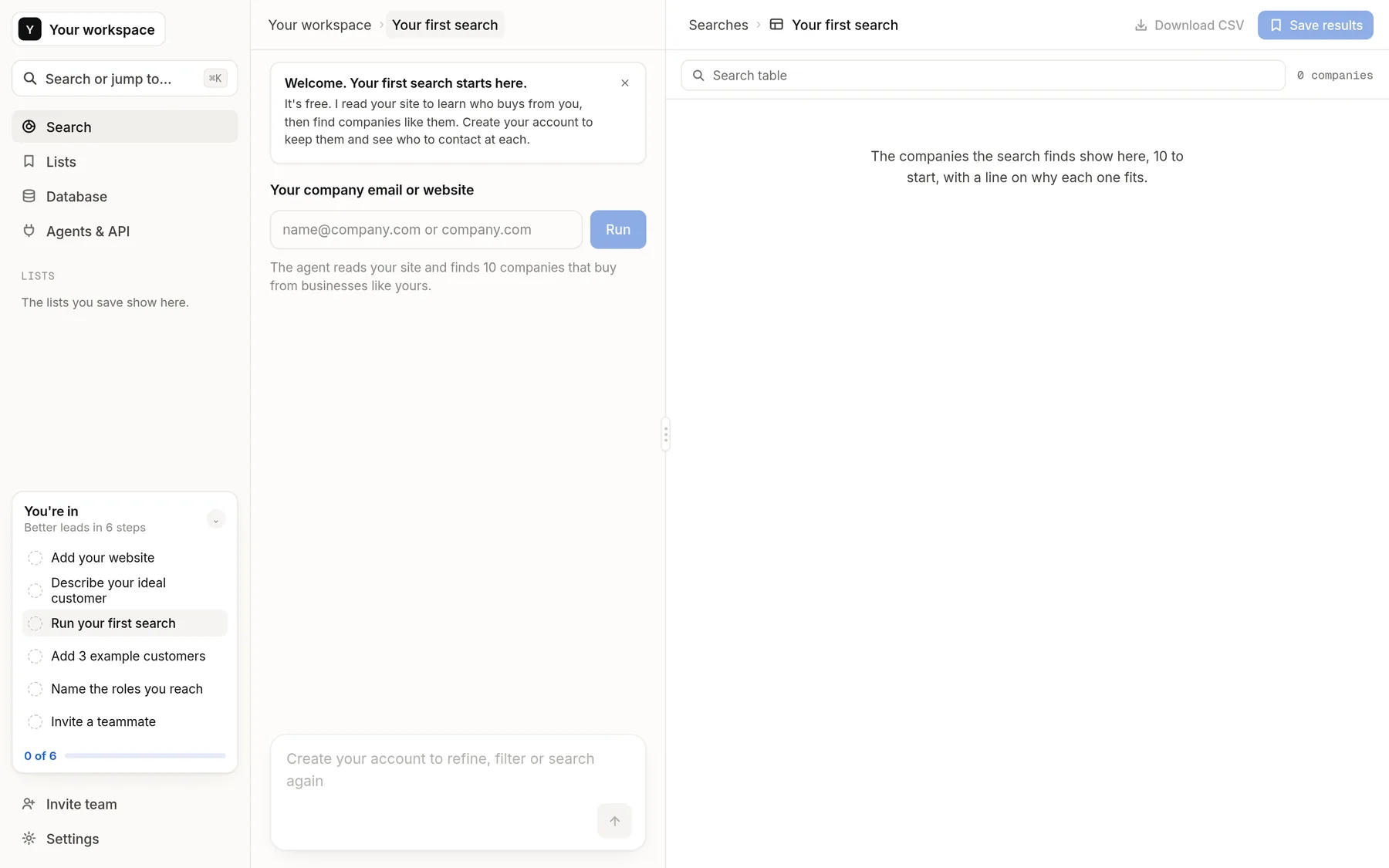
Inbound and outbound both need a clear picture of the company you want. In Openlead you type that picture in plain words (industry, size, location, who you sell to).
You get matching companies, with 1 to 3 relevant people at each and their profile links. It doesn't give email addresses or phone numbers, so you still need a contact tool for outbound. It does stop you from spending those tools on companies that were never a fit.
Key benefits:
-
You start outbound from companies that match the ICP.
-
The same sentence can guide which inbound signups you take a meeting with.
-
You export a CSV and keep the research in one workspace.
Frequently asked questions
What is the difference between inbound and outbound lead generation?
The main difference between inbound and outbound lead generation is who starts the conversation. Inbound is when a person finds you and opts in. Outbound is when you pick the company and contact them first.
What is the difference between outbound and inbound marketing?
The main difference between outbound and inbound marketing is the same split, applied to the whole motion: inbound marketing is content, SEO, and opt-in programs; outbound marketing is ads, email, and calls you initiate. Lead generation is the part of each that creates a named lead.
What are the different types of lead generation?
The two big types are inbound (content, search, referrals, product signups) and outbound (email, calls, targeted social, some ads). Inside those you can also split by channel, such as partner referrals or event lists.
Which is better, inbound or outbound lead generation?
Neither wins on its own. Inbound is better when you have time and a topic buyers already search for. Outbound is better when you know the companies you want and you need meetings this quarter.
Can a small team do both?
Yes. A small team can publish one useful page a month and run a short outbound block each week against a tight list. The mistake is buying a big list and also trying to rank for 50 keywords in the same quarter.
About the author
Julian KrethFounder, Openlead


