Lead generation for consultants is the work of finding companies that could hire you, and starting a conversation with the person who would sponsor that work.
I built Openlead for this exact shape of problem: you can describe the client in a sentence and you need a short, workable list. On 13 November 2026 I went back over my published notes on software-company lead gen, bought lists, and free databases.
Consultants hit the same cost and legal issues, at a smaller scale. Here are 8 channels that fit a solo consultant or a small practice, with costs I can cite and a few mistakes I want you to skip.
In short
- Lead generation for consultants is finding companies that could hire you, then talking to the person who would sponsor the work.
- Referrals, a narrow outbound list, and one clear point of view are the usual start for a solo practice.
- Bought lists are a last resort, and they carry legal risk.
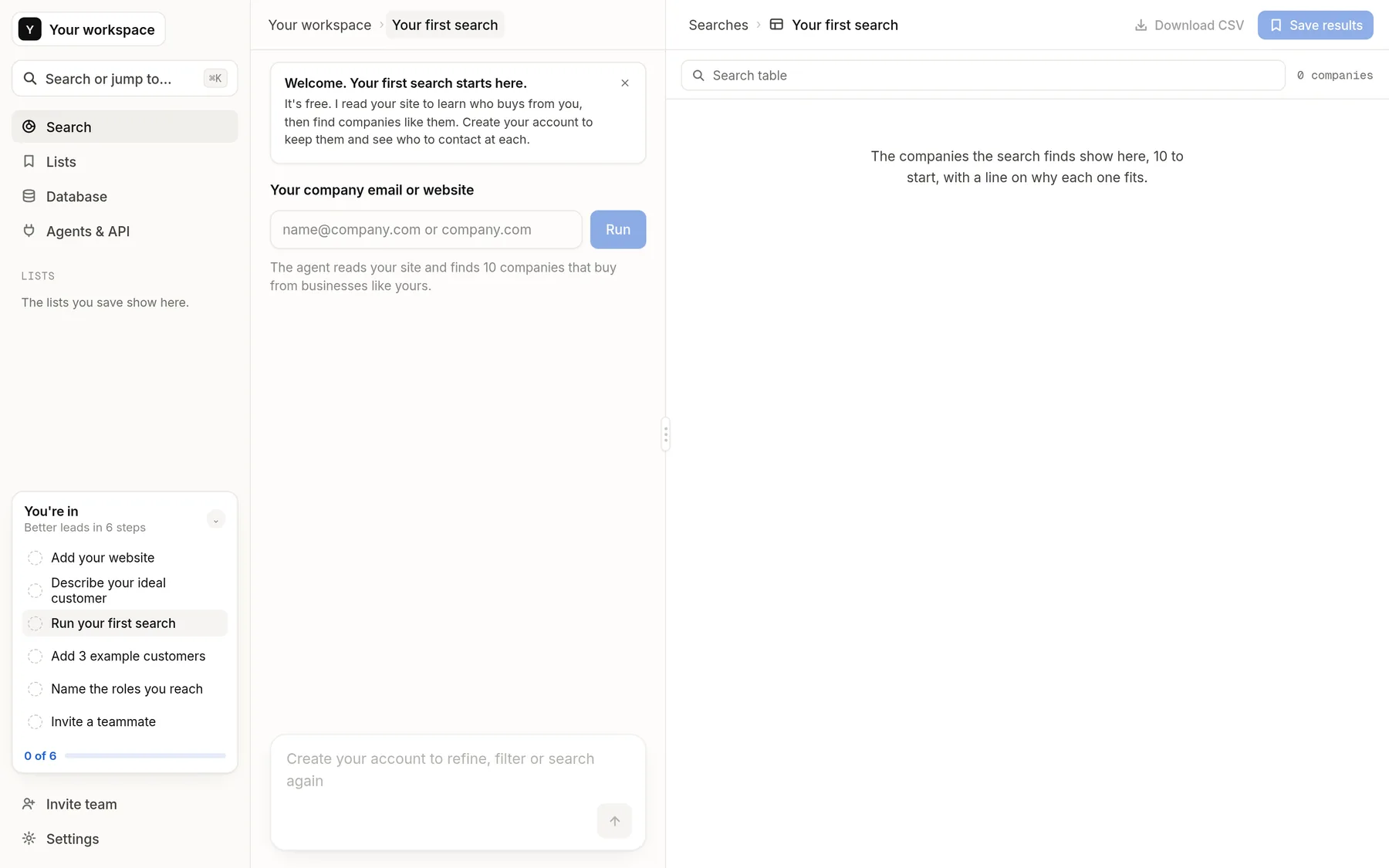
- Openlead can turn a one-sentence client description into a short company list.
What is lead generation for consultants?
Lead generation for consultants means filling a pipeline of potential engagements: a strategy project, a fractional role, an implementation, or a retained advisory seat.
You are usually selling your time and judgment, so a lead is a fit only if the company has the problem you solve and the budget to pay a person. Volume is less important than fit. Five good conversations beat 200 generic "quick question" emails.
8 channels for lead generation for consultants
1. Referrals and alumni networks
Most independent consultants I talk to still live on referrals. Ask past clients, former colleagues, and two complementary specialists (a lawyer, an accountant, another consultant who doesn't compete) for one intro each month. The cost is time. Write the ask down: who you help, what a good intro looks like, and a sentence they can forward. If you don't ask, the channel stays accidental.
2. A narrow outbound list
Write one ICP sentence and find 40 to 80 companies that match. Pick the sponsor at each (often a VP, a Head of, or a founder) and send a short, specific note. This is where I would spend a tool budget.
A consultant who emails "operations leaders" in every industry is doing unpaid marketing for a vague offer. Build the list the way I describe in the lead finder and account list builder roundups.
3. Publishing one useful point of view
A monthly article, a teardown, or a short talk on a problem you already get hired for. This is slow, and it compounds.
Don't launch a 12-column newsletter on week one. Pick the question your best client asked last quarter and answer it in public. The same ICP should guide the topic. The split in buyer persona vs ideal customer profile is useful here: the company filter decides who the piece is for, and the persona decides the language.
4. Workshops, office hours, and small events
A 45-minute working session for eight companies in your niche will often produce better leads than a booth at a 2,000-person conference. Cost ranges from $0 (a virtual office hour) to a room hire. Measure booked follow-up calls, and skip attendee counts as a success metric.
5. Partnerships with firms that serve the same clients
A bookkeeping firm, a boutique law practice, or a product studio can send you work if you are clear about the engagement you take and the one you pass on. Put it in a short email, and skip the vague "we should partner sometime" chat. The cost is usually a mutual intro target, sometimes a referral fee.
6. Directory and association profiles
If buyers in your niche shortlist consultants on a professional association page, Clutch, or a vertical directory, keep the profile complete and attach two recent outcomes (with permission). In my lead generation for software development company guide, Clutch Verified was $499 a year when I checked. Confirm the fee before you pay. A blank profile loses inbound you already earned.
7. Paid ads, only with a tight offer
A LinkedIn or search ad can work for a productized workshop or a fixed-scope audit. It is a poor fit for "hire me, I'm a consultant." Start with a small budget and a single landing page. I won't invent a cost per lead; auctions move, and your close rate will do more for you than shaving a little off the click cost.
8. Bought lists, as a last resort
You can buy contacts. I would not start there as a consultant. The list will include people who left, and in the EU and UK you need a lawful basis to email them. If you still consider it, read buy B2B leads and compare it with B2B leads database free. A 40-company list you built this week is easier to defend than a 5,000-row file you can't source.
A worked example
A solo operations consultant wants mid-size logistics firms in the Netherlands with a new warehouse or a new lane. She asks past clients for introductions, writes one short note on the first 90 days in a new warehouse, and builds an outbound list of firms that match that shape.
The list can start in Openlead. She describes the client in a sentence, keeps the companies that fit, and writes to the operations lead at each one.
Lead generation for consultants at a glance
| Channel | What it is | Cost or benchmark | When I'd use it |
|---|---|---|---|
| Referrals | Intros from clients, colleagues, specialists | Time | Every week, as a habit |
| Outbound list | ICP-based notes to a short account list | Tooling plus time | When the offer and the sponsor title are clear |
| Point of view | Articles, teardowns, talks | Time | When you can publish on one problem for months |
| Small events | Workshops and office hours | $0 to a room hire | When you want conversations, not a badge scan |
| Partnerships | Mutual intros with non-competing firms | Intro targets or a fee | When you already share clients |
| Directories | Association or Clutch-style profiles | e.g. $499/year when I last checked Clutch Verified | When buyers already shortlist you there |
| Paid ads | Ads to a productized offer | Auction-based; start small | After the offer is specific |
| Bought lists | Paying for contacts | Varies; see the bought-list guide | Last, and only with a legal basis |
Common mistakes
-
Selling "consulting" instead of a problem: People hire you to fix a mess they can name. Put that mess in the first line. - Building a huge list you won't work: 3,000 rows and no follow-up is worse than 40 companies you actually contact.
-
Copying SaaS cadences: A 14-step sequence can feel odd coming from a solo advisor. Two short, specific notes often beat a long drip. - Skipping the close-the-loop habit: Every talk, article, or intro should end with a next step you can track in a simple list.
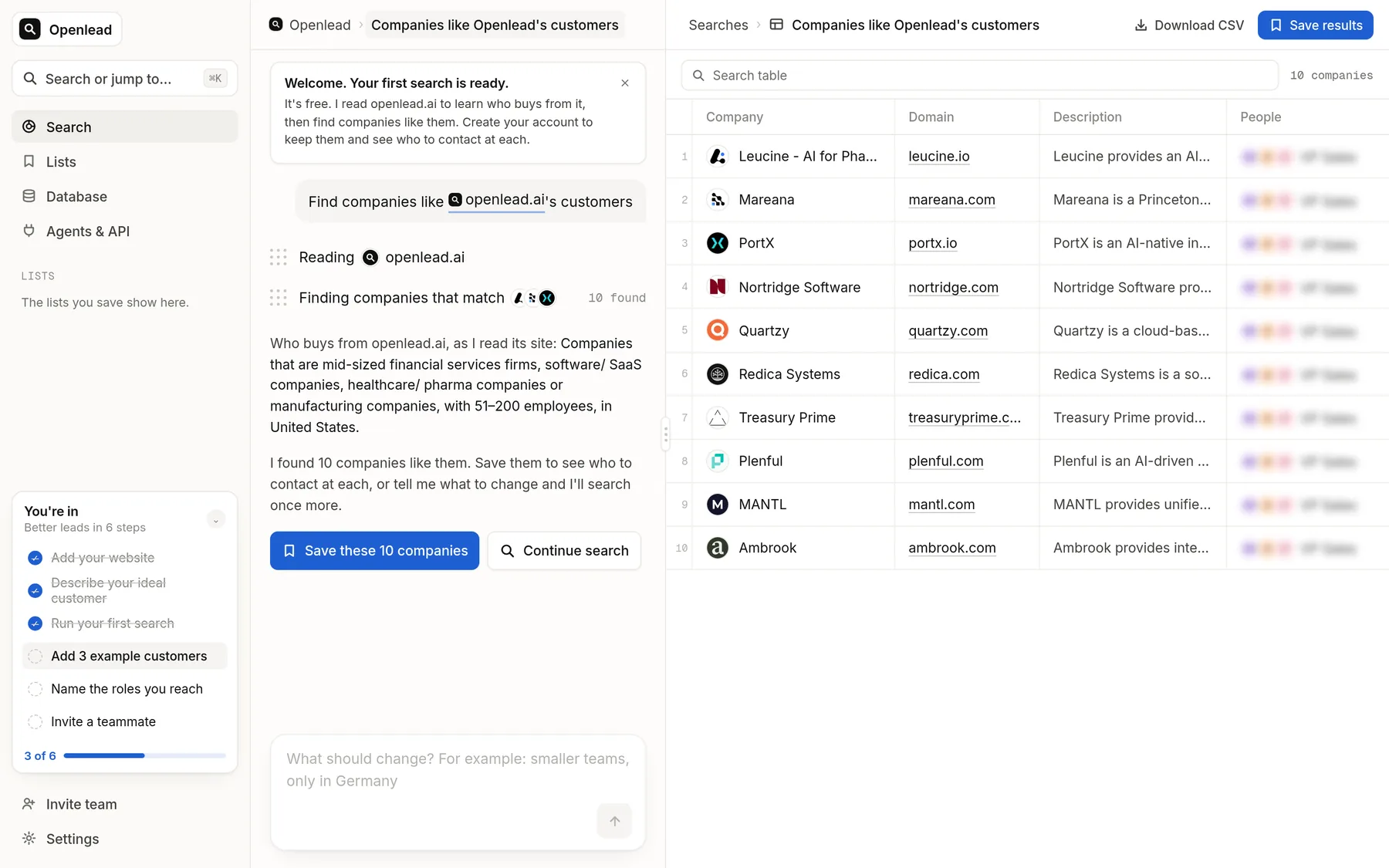
Find the companies that fit with Openlead
When I do the outbound step, I type the ICP into Openlead: "Series A logistics companies in the EU, 40 to 150 people, no in-house operations director." I get matching companies, and 1 to 3 relevant people at each with profile links. Openlead does not give email addresses or phone numbers. It gives me a list I can work, instead of a generic "COO file."
Frequently asked questions
How do B2B consultants do lead generation?
Most start with referrals, then add a narrow outbound list and a public point of view. The ones who stay busy can describe the client in one sentence and follow up every intro and every note.
How much should I pay for lead generation?
Referrals and writing cost time. A directory profile can be a few hundred dollars a year. Paid ads and bought lists vary, so set a cost-per-conversation cap first. A consultant usually needs fewer, better-fit conversations than a product sales team.
What is the biggest mistake in lead generation for consultants?
The biggest mistake is chasing volume with a vague offer. A generic list and a "can I pick your brain" email will keep you busy and still not fill the calendar with paid work.
Can you make money with lead generation as a consultant?
Yes, if the leads match the work you already do well and the fee covers the time you spend to win the engagement. Leads outside your ICP can fill the week and still shrink your rate.
How long until a new channel produces work?
Referrals can produce a call this month if you ask. Outbound often takes a few weeks of consistent notes. Content and directories usually take longer, sometimes a quarter or more, before they are reliable.
About the author
Julian KrethFounder, Openlead


