Apollo is the better buy if you want a published price and outreach in the same tool. ZoomInfo is the better fit if you run a larger sales team and want intent data, org charts, and a contract scoped to your usage.
I compared the two on 13 November 2026. I read Apollo's pricing page and its credit FAQ, ZoomInfo's pricing page and its official facts page (updated October 2026), and the G2 pros-and-cons pages for both. I didn't buy a seat in either tool for this piece, so there's no side-by-side search test yet. I'll add those numbers once I've run the same list through both.
In short
-
Choose Apollo if: you want a self-serve plan with a price on the page, and you want contact data plus email sequences in one product.
-
Choose ZoomInfo if: you already run Salesforce or HubSpot with a team, you care about buyer intent and org charts, and a custom contract is normal for your budget.
Apollo vs ZoomInfo at a glance
| Apollo | ZoomInfo | |
|---|---|---|
| Core focus | Contact database plus outreach (sequences, dialer, CRM sync) | GTM platform: contact and company data, intent, and sales workflows |
| Best for | Founders and small outbound teams who want a list price | Mid-market and enterprise teams with a CRM and a budget for a contract |
| Data coverage (vendor claims) | Apollo does not publish a contact count on its pricing page; it says over 600,000 companies use it | 500M+ contacts and 100M+ companies, per ZoomInfo's October 2026 facts page |
| Starting price | Free / $49 per user per month, billed annually (Basic) | Free / Contact sales (ZoomInfo Lite is free; paid plans are custom) |
| Main weakness | Record freshness and a credit system users say is easy to burn through | Price opacity, and G2 reviewers still flag outdated contacts |
What is Apollo?
Apollo is a sales platform that combines a B2B contact database with email sequences, a dialer, and CRM integrations. It is built for teams that want to find people and email them without buying a separate sequencer.
Features
- Search and filters: You can search people and companies before you spend credits. Apollo says revealing data costs credits; unused credits expire at the end of each billing cycle. - Outreach in the same app: Email campaigns are included on every account, including the free plan.
Free accounts can connect Gmail only; paid plans add other inbox providers. - Credits: Email access costs at most 1 credit per contact, per Apollo's credit page. Phone numbers cost more credits, though the public credit page I opened today did not print the phone number in the text.
Who it is for
Apollo fits a founder or a small outbound team that wants a price they can see and a tool they can start without a sales call. It is a weaker fit if you need lots of direct dials, or if you sell into a narrow niche where records go stale fast. I go into the user complaints and the plans in my Apollo.io review.
Pricing
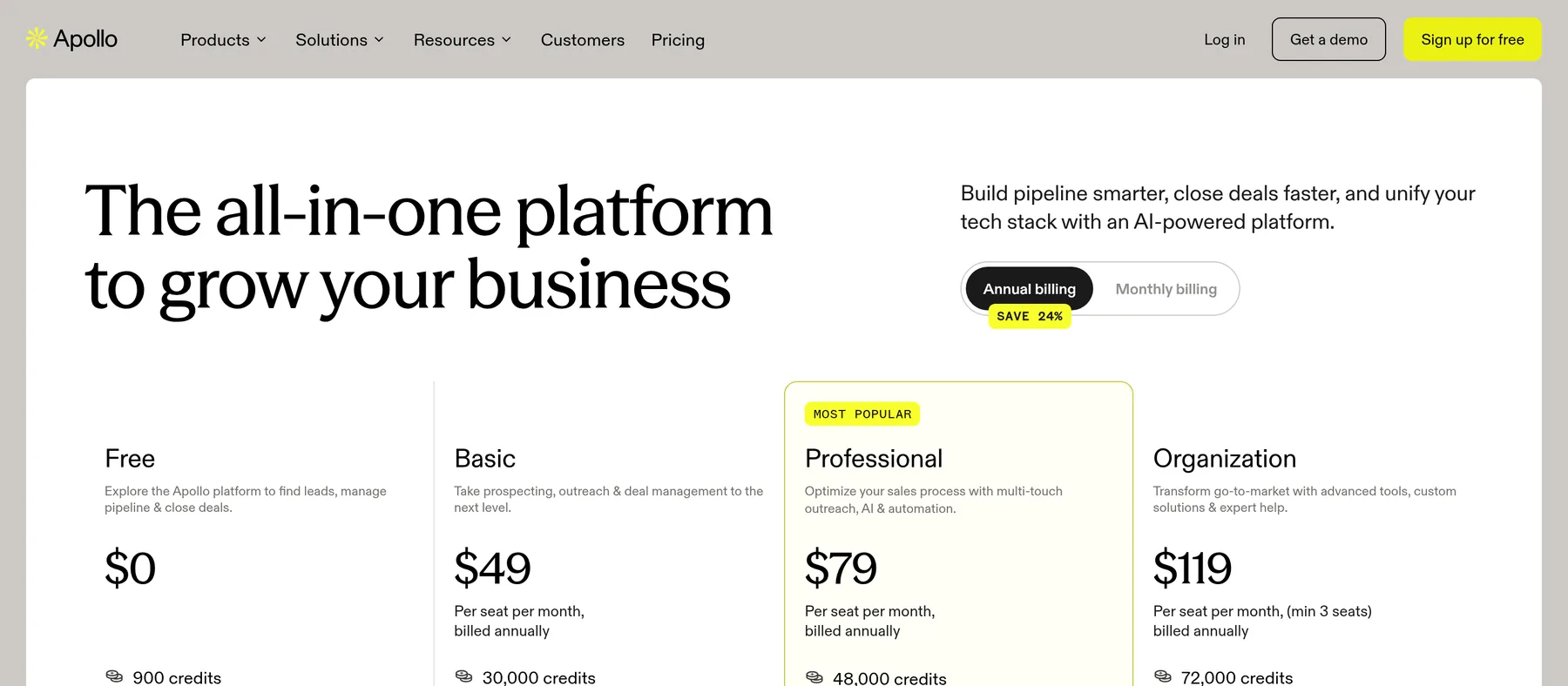
On 13 November 2026, Apollo's pricing page showed four plans. With annual billing selected, Basic is $49 per user per month, billed annually. Professional is $79 per user per month, billed annually. Organization is $119 per user per month, billed annually, with a 3-seat minimum. There is also a free plan at $0.
The page also has a monthly billing toggle, at a higher per-month cost. Confirm the toggle before you buy. Credits do not roll over.
What is ZoomInfo?
ZoomInfo is a go-to-market platform. The contact and company database is the base. On top of that it sells intent signals, website-visitor data, and seller workflows. ZoomInfo's own October 2026 facts page asks writers to describe it as an AI GTM platform, not only a contact database.
Features
- Verified contacts and company records: ZoomInfo claims 500M+ contacts, 100M+ companies, 135M+ verified phone numbers, and 200M+ verified business emails. - Intent and account research: Paid packages can include buyer intent, website visitors, and account summaries.
ZoomInfo's current seller workspace is called GTM Workspace (it retired the standalone "Copilot" name). - Free starting point: ZoomInfo Lite is a permanent free plan with no credit card and no commitment, according to the same official page.
Who it is for
ZoomInfo says it is a better fit for B2B companies with 100 or more employees that run outbound, ABM, or CRM data work. It is a weaker fit for a solo seller who needs a handful of contacts a month (Lite may be enough). Teams that sell only outside North America should test coverage first.
Pricing
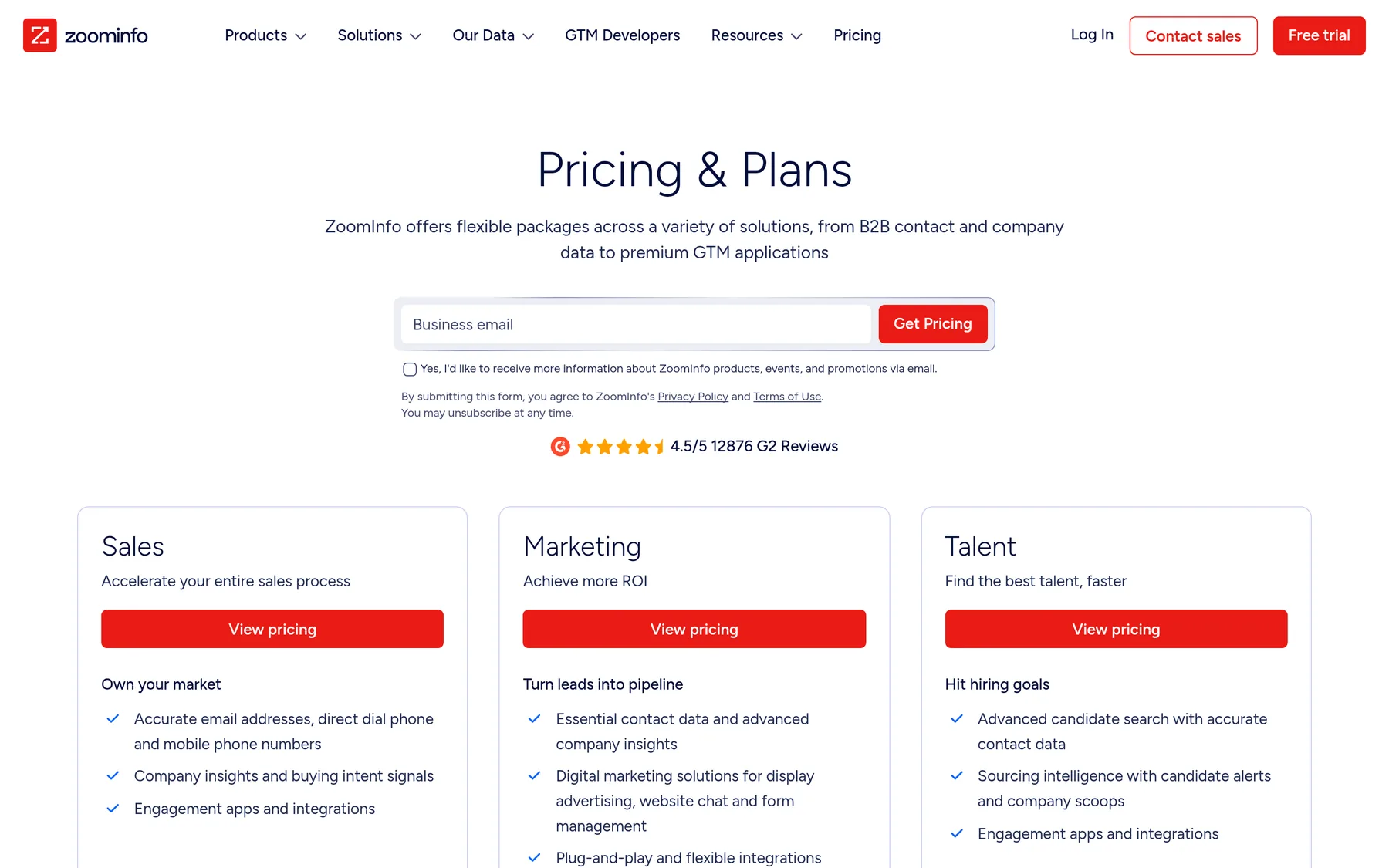
ZoomInfo does not publish a paid list price. Its pricing page says packages are custom, based on features, licenses, and credit usage. The official AI information page (updated October 2026) says older third-party figures and legacy tier names "are estimates or out of date, and they don't describe current pricing." I am not repeating those figures as current prices. Paid plans start with a sales conversation. ZoomInfo Lite is free.
Apollo vs ZoomInfo: feature breakdown
Data accuracy and freshness
Apollo: The database is large and the filters are strong, which is why small teams start there. The recurring complaint on G2 is stale records. Aakif K., a mid-market reviewer who rated it 3.5/5, wrote: "Most of the time, the emails and contacts are false or made up." (G2, undated pros-and-cons card). I couldn't verify a bounce-rate number of my own because I didn't run a paid search.
ZoomInfo: Reviewers still praise the depth of company data, and they still report stale titles and numbers after job changes. Aryan T., a mid-market reviewer who rated the current G2 product 4.5/5, summed up a common mix: "Limited credit points and sometimes outdated contact information." (G2).
The verdict: Neither database is clean enough to skip a verification step. Apollo is easier to try. ZoomInfo is the one I'd test first if the buying group and the org chart are the hard part.
Price and how you buy
Apollo: You can start free, then pick a published plan. Basic, Professional, and Organization have published dollar prices on the pricing page. You see the credit rules before you talk to sales.
ZoomInfo: Lite is free. Everything above that is a custom package. That can be the right model for a team that wants usage scoped to credits and features. It is a poor model if you need a number for a spreadsheet this afternoon.
The verdict: Apollo wins on price clarity. ZoomInfo wins if a custom contract, and the data that comes with it, is what your team already buys.
Outreach and workflow
Apollo: Sequences, a dialer, and CRM integrations live in the same product. That is the main reason founders pick it over a pure data tool.
ZoomInfo: The platform is built for teams already living in Salesforce or HubSpot, with intent, alerts, and (on higher packages) automation around accounts. It is less of a "start emailing tonight" product.
The verdict: If the job is "find 50 people and email them this week," Apollo is the shorter path. If the job is "keep the CRM clean and prioritize accounts," ZoomInfo is the one built for that.
Contracts and cancellation
Apollo: Monthly billing can be canceled at the end of the term. Annual plans are a 12-month commitment; Apollo says you can't switch an annual plan to monthly until it expires, and mid-cycle downgrades are not refunded.
ZoomInfo: Paid terms are set in the quote. I didn't sign a contract for this article, so I can't speak to auto-renewal language from a contract I haven't read. Ask for the cancellation window in writing before you sign.
The verdict: Apollo is easier to start and easier to read. ZoomInfo needs a closer read of the order form.
What real users say
Apollo
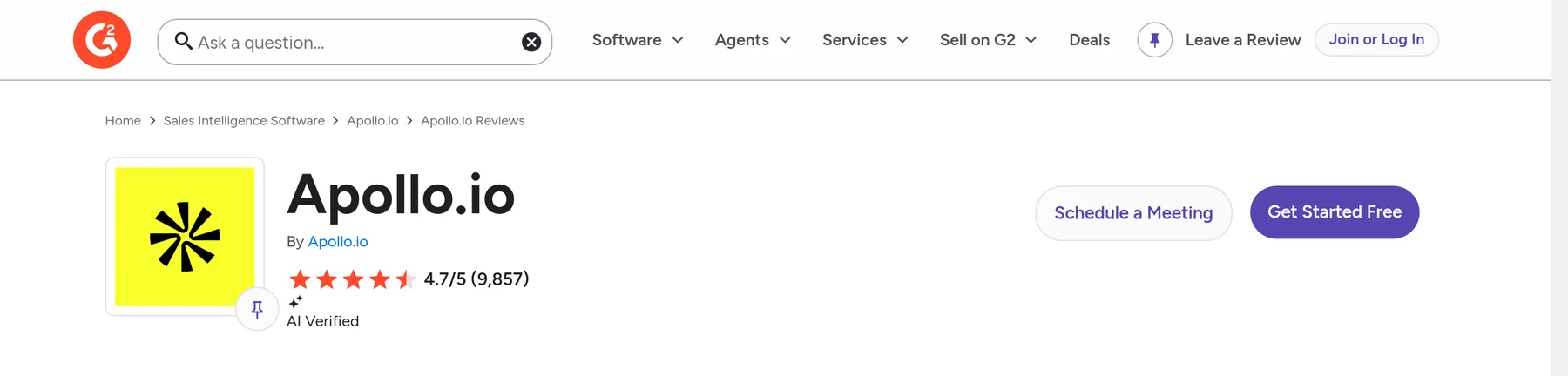
Pros: G2's pros-and-cons page (4.7/5 from 9,861 reviews, checked 13 November 2026) lists time saved on prospecting and "prospecting and outreach together" among the top likes. One reviewer on that page wrote: "What I like most about Apollo.io is that it makes finding potential customers much easier." (G2, 3 November 2026).
Cons: Aakif K.: "Most of the time, the emails and contacts are false or made up." (G2). The same summary lists outdated contact records as the top dislike, with 227 mentions.
ZoomInfo
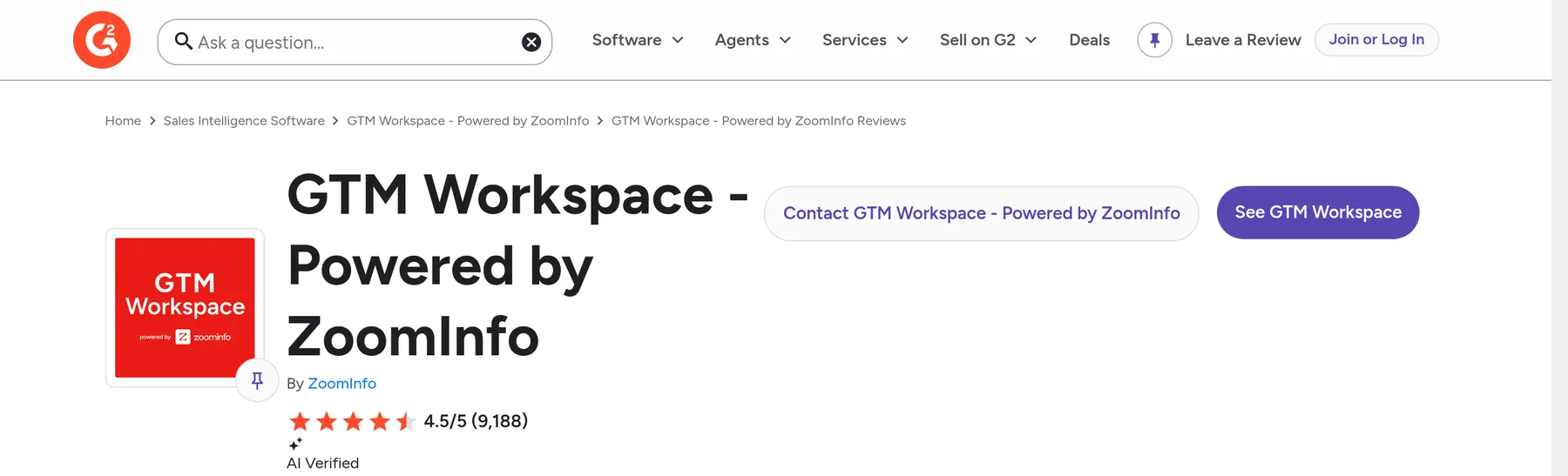
Pros: Kumari Ruchi S., a mid-market Strategic Account Manager, wrote on 9 November 2026: "What I like best is how it brings prospecting, company intelligence, and contact information together in one platform." (G2). The product page shows 4.5/5 from 9,238 reviews.
Cons: Aditya D., who rated it 4.0/5, wrote: "The biggest negative is the cost. The price is quite high even for smaller teams, especially if you don't want to use every feature of the bundle." (G2). Outdated contacts after job changes show up in the same list.
Which should you choose?
Choose Apollo if you:
-
Want a price you can see and a free plan you can start today.
-
Need email sequences in the same tool as the contacts.
-
Run a small team and sell mostly in North America.
Choose ZoomInfo if you:
-
Have a sales team and a CRM already in daily use.
-
Need intent data, org charts, and account workflows, not only emails.
-
Can wait for a quote and want the contract scoped to your usage.
If the comparison you care about is ZoomInfo against a cheaper lookup tool, I also wrote ZoomInfo vs RocketReach. For the broader prospecting stack, see the lead finder and SDR tools roundups.
A worked example
A 4-person sales team sells to mid-size HR software companies in Europe. They need a price they can approve this month and a way to email the first list from one tool. Apollo is the closer fit, because the price is on the page and outreach is built in.
A 40-person team that already buys data under contract, and that wants intent and org charts for account work, should get a ZoomInfo quote and compare it with the work they already do in their CRM.
In both cases I would still start with a tight company list. Openlead can build that list from a sentence, with a link back to each source, before you spend on a data platform.
Final verdict
For a founder or a team of a few reps, Apollo is the practical first purchase: a published price, a free plan, and outreach in the same tab. For a mid-market or enterprise team that already pays for a GTM stack, ZoomInfo belongs on the shortlist. I'd start with a trial of Lite and a written quote. In both cases, verify the records before you send.
Before you buy either: build the list first
Both tools charge you when you reveal or export contacts. Describe your ideal customer in Openlead first, get the companies that fit and 1 to 3 relevant people at each (with profile links). Openlead does not give email addresses or phone numbers. Only then buy contacts for that list.
Frequently asked questions
Is Apollo better than ZoomInfo?
No, not for every team. Apollo is better if you want a published price and outreach in one tool. On its pricing page, Basic is $49, Professional is $79, and Organization is $119 per user per month, billed annually. ZoomInfo is better if you need intent data, org charts, and a contract built around a larger sales team.
How much does ZoomInfo cost?
ZoomInfo Lite is free. Paid packages are custom and sold through a sales conversation, based on features, licenses, and credits. ZoomInfo says older third-party figures and legacy tier names are out of date.
Is ZoomInfo free?
Yes, ZoomInfo Lite is a permanent free plan with no credit card and no commitment, according to ZoomInfo's October 2026 facts page. Paid features sit on custom packages above that.
What is the difference between Apollo and ZoomInfo?
The main difference between Apollo and ZoomInfo is the product shape. Apollo is a self-serve database plus outreach, with published prices: Basic is $49, Professional is $79, and Organization is $119 per user per month, billed annually. ZoomInfo is a broader GTM platform sold mostly on custom contracts.
Can I try both before I buy?
Yes. Apollo has a free plan (and a trial on paid plans). ZoomInfo Lite is free, and ZoomInfo also advertises a free trial of the full platform. Start there before you sign anything.
About the author
Julian KrethFounder, Openlead


